
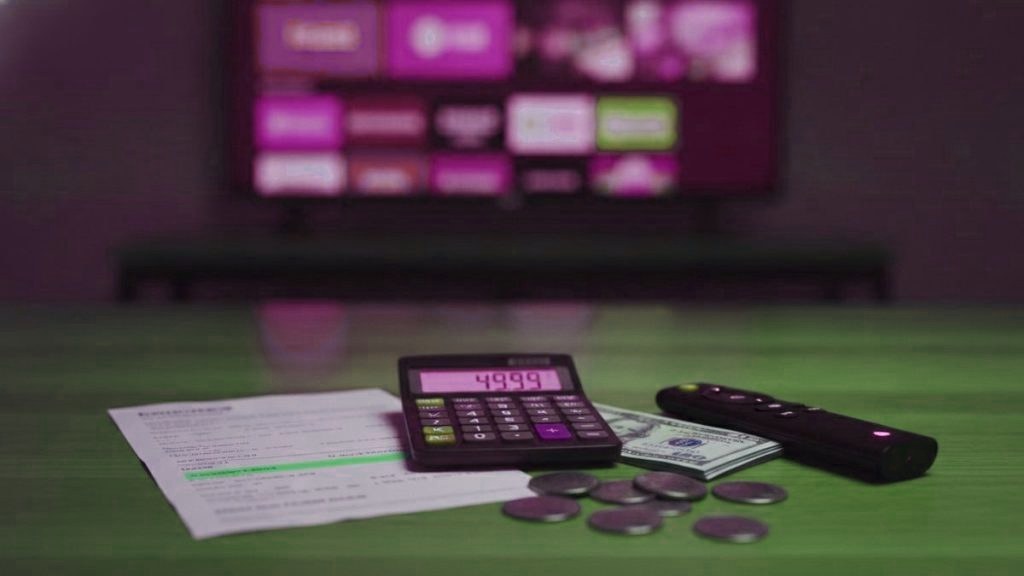
The new subscription is the smallest part of what switching costs, and the only part anyone compares. Counted properly, a move includes whatever remains on your current prepaid term, an evening of work, possibly a third-party app licence, and — for a surprising number of people — a piece of hardware bought to solve a problem the hardware was never causing. Here is the whole list.
The short version
Subscriptions run $15 a month or about $69 a year. The real costs of moving are the prepaid time you forfeit, an hour of setup, and hardware you probably do not need. The way to minimise all three is to run both lines at once rather than cancelling first.
Line one: what you forfeit on the old term
This is the largest number in most switches and it never appears on a comparison table. If you paid $69 for a year in February and you are leaving in June, you are walking away from roughly $40 of prepaid service. If the provider has already stopped working, you walked away from it whether you move or not.
Two things follow. First, if the old service is merely mediocre rather than dead, there is a reasonable argument for running the new one alongside it until the term expires and switching properly at the end — it costs an extra $15 and wastes nothing. Second, and more importantly, this is the entire case for buying monthly on a first purchase with anybody. The annual saving is about $54 spread across twelve months. Forfeiting eight months of a year because a provider folded costs more than that in a single event.
Line two: the new subscription
Ours is $15 for one month, $29 for three, $45 for six and $69 for twelve, which works out near $5.75 a month on the longest term. Additional simultaneous viewers raise it: a year runs $119 for two, $159 for three and $239 for five. The market around those figures is broadly similar, with a long tail of cheaper offers underneath that are cheaper for a reason.
What a longer term buys is exclusively a lower monthly rate. It does not buy more channels, better quality or faster support, and any provider whose annual plan includes content the monthly one lacks has invented a tier to make comparison harder.
Line three: your time
An hour, realistically, spread across an evening. Adding a second playlist to a player you already use takes about five minutes. Testing it properly takes an evening, though you were going to be watching television anyway. Rebuilding favourites on the new line takes twenty minutes and is the part people forget to budget for, because favourites belong to the playlist and do not transfer.
Each additional television is two minutes once the first is done, since the credentials are identical. A household with four screens is not looking at four times the work.
Line four: app fees, which are not ours
This one surprises people because it arrives from a third party in the same week as the subscription and looks like a hidden charge. It is not, and it is worth being precise about.
IPTV Smarters Pro is free everywhere and always has been. TiViMate is free at its basic tier, with Premium at roughly $9.99 a year or a one-off lifetime licence between $34 and $38 — and this matters for switchers specifically, because multiple playlists is a Premium feature. Running two providers side by side in TiViMate needs it, though the seven-day trial covers a comparison comfortably. Smart IPTV runs free for seven days then asks a small one-time activation per television, paid at siptv.app, and that activation stays with the television when you change provider rather than being charged again. None of that money reaches whoever sells you the line.
Line five: hardware you probably do not need
Here is where switchers waste the most money. Having had a bad experience, people replace the box at the same time on the theory that something must be wrong. Usually nothing was.
The picture is limited by your connection, then by what the broadcaster produced, then by your television, and only then by the box. If streams failed at peak and held at midnight, that was capacity at the provider and a new stick would have changed nothing. Whatever ran the last service will run the next one — the credentials are a standard Xtream login, not something requiring particular hardware.
Where you genuinely need something: a Fire TV Stick 4K Max at $30 to $50 covers most cases. An Nvidia Shield is faster and costs more than a year of subscription. Formuler and MAG boxes at $120 to $180 earn their place on a main television watched daily. And one caution that applies especially to MAG: it binds to a portal by MAC address, so it can only be moved by a provider willing to activate your specific box. If you bought one on a previous provider’s recommendation, that was a lock as much as a recommendation.
The $20 ethernet cable, on the other hand, is the best-value purchase in this entire article and resolves more reported faults than any other single change.
Line six: the cost of getting it wrong again
Not a number, but it belongs here. Switching twice in six months costs you two setup evenings, two lots of forfeited prepaid time, and the accumulated irritation of a household that has now had the television break twice.
That risk is what the free checks are for, and it concentrates exactly where the prices are lowest. A year for $20 is beneath what bandwidth, servers and staff cost. The gap is funded by something that does not last, which is generally how people arrive at a page about switching in the first place.
What we would actually advise
Run the new line beside the old one rather than cancelling — that alone removes most of the risk and all of the forfeiture anxiety. Buy a month, even though the year earns us more. Do not buy hardware until you have established it is the hardware. Then extend to a year once a service has watched through two busy weekends without embarrassing itself.
That is the arithmetic we would apply ourselves, and it is worth noticing it is close to the opposite of what a provider optimising for revenue would tell you.
The costs that are not money
Two more belong on an honest list and neither carries a price.
The first is household disruption. If you live alone, switching is an evening. If you do not, it is an evening plus a week of somebody else discovering that the channel numbers moved, their favourites are gone and the thing they watch at seven is now somewhere else. That is a real cost and it is the reason to do the move deliberately — rebuild favourites properly, renumber the thirty channels that matter, and do it before anyone else notices rather than after.
The second is the support relationship you are giving up, assuming there was one. A provider who answered messages is worth more than a slightly cheaper one who does not, and that difference is invisible on a comparison table and obvious at eleven at night mid-match. If the service you are leaving failed on capacity but had genuinely good support, be aware you may be trading one problem for another and test the new one’s responsiveness before committing.
Neither appears on any comparison anywhere, and both are larger than the difference between most of the prices being compared.
Frequently asked questions
Can I get a refund on the provider I am leaving?
Occasionally, within whatever window their policy states, and usually not. Most refund policies in this market cover the service not working rather than you choosing to leave. Check what they published, ask once, and do not count on it. This is the strongest practical argument for buying monthly in the first place.
Should I cancel before starting somewhere new?
No. Run both at once. Every player worth using holds more than one account, so you can compare on a live evening and let the old one lapse on its own date. Cancelling first is how people ended up buying blind the previous time, and there is no reason to repeat it.
Is it worth waiting until my current term expires?
If the old service is merely mediocre rather than broken, yes — run the new line alongside for the last month and switch cleanly at the end. If it is already failing, you have forfeited that money whether you move today or in June, so there is nothing to wait for.
Will I need to buy a new box?
Almost certainly not. Whatever ran the last service runs the next one, because the credentials are a standard Xtream login. If the old service stuttered at peak and held at midnight, the box was never the problem. Establish that with a laptop before spending anything.
Does TiViMate Premium count as a cost of switching?
Only if you want two playlists at once, which we would recommend. The seven-day trial covers a comparison at no cost. If you decide to keep it, it is about $9.99 a year and the money goes to the developer rather than to any provider.
Why not just take the cheapest offer I can find?
Because there is a good chance that is exactly what you did last time. Bandwidth, servers and people carry a cost floor and a year for $20 sits under it. That does not make cheap automatically bad, but a figure well outside the market needs an explanation, and you are entitled to ask for one before paying.
Does a longer plan ever include more than a shorter one?
It should not, and where it does you are being sold a manufactured tier. Term length ought to change one thing: the monthly rate. Where a provider's annual plan carries channels the monthly one lacks, the comparison has been made deliberately harder and that is worth noticing before you commit to twelve months of it.
Moving from somewhere else?
Tell us what you are on now and what went wrong with it, and we will say plainly whether this fixes it. A 24-hour test line runs alongside your current subscription, so nothing has to be cancelled first.
Related articles
Do Not Buy a New Box to Fix a Provider Problem
Before replacing the box, establish whether it was ever the problem. A ten-minute test, and where extra money genuinely helps rather than…
September 4, 2026Which Player Makes Changing Provider Painless
TiViMate, Smarters, Smart IPTV and IBO Player judged on one axis nobody else uses: can they hold two providers at once so…
August 31, 2026Does Changing IPTV Provider Change Anything Legally?
Changing provider changes nothing about the legal position, and understanding why is genuinely useful. The three questions people tangle together, pulled apart.